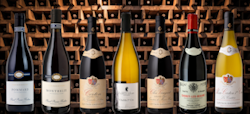
| MAISON: |
Maison E. Guigal, based in Ampuis in the Rhône region, is one of the most iconic and influential producers and merchant-winemakers in the Rhône Valley. Founded in 1946 by Étienne Guigal, the firm has remained entirely family-owned, led successively by Marcel and subsequently Philippe Guigal. The estate’s crown jewel is the Château d’Ampuis, a site of great historical significance located along the banks of the Rhône. |
| CONSEIL DE SERVICE |
To reveal the full aromatic finesse and suppleness of the Syrah grape, the Crozes-Hermitage Rouge from Maison E. Guigal should ideally be served at a temperature between 16°C and 18°C. It also benefits from being opened or decanted one hour before tasting, especially when consumed in its youth. Temperature and Aeration Following the recommendations of Maison E. Guigal and specialized wine merchants such as Vinatis, a few simple steps can help optimize how the wine is served:
• Ideal temperature (16°C to 18°C). Avoid serving it at room temperature in an overheated room (above 20°C), as the alcohol will overpower the fruit. If the bottle has been stored in a cupboard, place it in the refrigerator for about 20 to 30 minutes before the meal.
• Decanting or opening in advance. For a recent vintage (less than 3–4 years old), decant the wine one hour before serving to soften the tannins and aerate the aromas of dark fruit and spice. For a more mature vintage (5 years or older), simply open the bottle 1–2 hours ahead of time—without decanting—to preserve the delicate tertiary aromas.
• Choice of glass. Opt for a stemmed glass, such as a Bordeaux or Syrah-style glass, with a relatively tall bowl that tapers slightly toward the rim; this helps concentrate notes of violet, blackcurrant, and black pepper. |
| GARDE |
The Crozes-Hermitage Rouge from Maison E. Guigal has an aging potential generally estimated at 3 to 8 years, which can extend to 8–10 years for great, sun-drenched, and well-structured vintages. Evolution of the wine over time Thanks to an 18- to 24-month maturation period in oak barrels at the Maison Guigal estate, this 100% Syrah cuvée offers a lovely suppleness upon release, while continuing to improve in the cellar.
• In its youth (1 to 3 years): The wine emphasizes approachability and vibrancy, showcasing fresh red and black fruits (cherry, blackcurrant, blackberry), hints of violet, and a touch of vanilla derived from the oak.
• At its peak (4 to 6 years): This is the ideal time to open the bottle, offering an optimal balance between the still-vibrant fruit, fully integrated tannins, and spicy notes of black pepper.
• With extended aging (7 to 10 years): In rich vintages (such as 2019, 2020, or 2022), the wine develops complex tertiary aromas, including licorice, forest floor, fine leather, and sweet spices.. |
| ACCORDS ET METS |
The Crozes-Hermitage Rouge from Maison E. Guigal pairs ideally with grilled or roasted meats, dishes simmered with mild spices, mushroom-based recipes, and aged pressed cheeses. With its supple structure—derived from 100% Syrah—and notes of dark fruit and black pepper, it serves as a highly versatile companion at the table. Red meats, poultry, and game The wine’s silky tannins and freshness perfectly balance the richness and charred flavors of meat.
• Grilled red meats: A rib steak grilled over vine cuttings, a pepper-crusted ribeye, or a flank steak with shallots resonate beautifully with the spicy notes of the Syrah.
• Lamb and pork: A leg of lamb roasted with Herbes de Provence, grilled lamb chops, or pork tenderloin with prunes highlight the wine’s fruity, fleshy character.
• Distinctive poultry and game: Seared duck breast, roasted guinea fowl with figs, or venison loin harmonize well with the subtle oak and vanilla nuances imparted during the wine’s maturation. Simmered dishes and vegetarian cuisine The aromatic richness of this wine makes it an excellent match for slow-cooked dishes or preparations high in umami.
• Dishes in sauce: A Provençal-style beef stew (*daube*), *boeuf bourguignon*, or *osso buco* melt on the palate, complemented by the wine’s supple texture.
• Vegetarian pairings: A creamy risotto with porcini or morel mushrooms, a pan-fry of wild mushrooms with garlic, eggplant and tomato gratin, or slow-cooked Puy green lentils all bring out the earthy, licorice-like notes of the wine. Charcuterie and Cheese For an informal evening spread (apéritif dinatoire) or to conclude a meal, opt for items with distinct character that are not overly intense.
• Artisanal charcuterie: A dry-cured sausage (*saucisson sec*) from the Ardèche, aged dry-cured ham, a rustic country terrine, or goose *rillettes* pair beautifully with a young vintage.
• Cheeses: Pressed cheeses—whether uncooked or cooked—such as a farmhouse Saint-Nectaire, an 18-month-aged Comté, a Tomme de Savoie, or a medium-aged (*entre-deux*) Cantal, create a lovely balance with the wine’s freshness. Pairings to Avoid Certain foods can cause the tannins to taste harsher or overwhelm the fruity notes of a Syrah:
• Fish and seafood: The iodine content and delicate texture of the flesh clash with the wine’s tannic and oak-influenced structure.
• Highly spiced or vinegar-based dishes: Strong chili heat amplifies the perception of alcohol, while the acidity in a vinaigrette throws the wine off balance.
• Very pungent blue cheeses: Cheeses like Roquefort or Bleu d’Auvergne risk masking the floral and fruity nuances of a Crozes-Hermitage. |