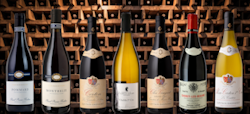
Gewurztraminer Hans Schaeffer

logo_001
Le vin d’Alsace est essentiellement produit en vin blanc, il peut être produit en vin rouge sous l’appellation Alsace Pinot noir. Dans cette région sont produits parmi les plus grands vins blancs du monde ! Les blancs peuvent être produits en blancs secs, moelleux, vendanges tardives, sélection de grains noble, avec tous les cépages typiquement alsaciens hormis le sylvaner et pinot noir bien entendu

2025 Biecher - Hans Schaeffer Gewurztraminer Alsace

Biecher - Hans Schaeffer Gewurztraminer Alsace
P645894
    Délai de livraison:48.00
Ajouter au panier
Biecher - Hans Schaeffer Gewurztraminer Alsace
Biecher - Hans Schaeffer Gewurztraminer Alsace is a premium aromatic white wine crafted in the heart of Alsace, France, offering rich spice and floral notes with elegant fruit character.

Biecher - Hans Schaeffer Gewurztraminer d'Alsace est un vin blanc exquis qui met en valeur les notes parfumées et épicées caractéristiques du cépage Gewurztraminer. Cette bouteille élégante séduit par ses arômes de litchi, de pétales de rose et de gingembre, équilibrés par une acidité vive.

Idéal pour accompagner la cuisine asiatique, les fromages ou en apéritif, il offre une expérience gustative raffinée. Savourez sa finale persistante et son caractère polyvalent lors de dîners, de fêtes ou de soirées tranquilles.

Biecher - Hans Schaeffer Gewurztraminer Alsace
  • Plus

Origines et terroir

Situation du vignoble

Situé dans le vignoble de Biecher, sur les versants des Vosges, le domaine de Hans Schaeffer bénéficie d’un microclimat unique. Les nuits fraîches et les journées chaudes permettent aux raisins de Gewurztraminer de mûrir lentement, développant ainsi des arômes intenses.

Composition du sol

Les sols calcaires et marneux confèrent minéralité et structure, rehaussant la profondeur et l'équilibre du vin.

Vendanges

Les raisins sont récoltés à la main à pleine maturité afin de préserver les arômes délicats et les composés aromatiques.

Fermentation

Fermenté dans des cuves en acier inoxydable à température contrôlée, ce Gewurztraminer conserve son caractère fruité vif et son acidité fraîche.

Notes de dégustation

Nez

Notes expressives de litchi, de zeste de pamplemousse, de pétales de rose et une touche d'épices exotiques (gingembre et cardamome).

Bouche

De corps moyen et à la texture soyeuse, il dévoile des saveurs de poire mûre, de fruits tropicaux et une touche de miel, menant à une finale vive et minérale.

Accords mets-vins

Idéal avec les plats asiatiques épicés, les crustacés, le foie gras et les fromages aromatiques. Il est également parfait à l'apéritif ou en accompagnement de desserts aux fruits.

Récompenses et distinctions

Ce vin a reçu de nombreuses distinctions, notamment des notes élevées de la part de critiques internationaux et des médailles lors de concours œnologiques européens.

Alsace is the land of storks and half-timbered houses, beer and sauerkraut. This is the image that all those who have never been there have too often. But anyone lucky enough to know knows that Alsace is not limited to these clichés. It is a region where life is good. The Alsatians, very attached to traditions, know how to welcome and share their love of the land and their art of living, and the table holds an important place. Here, gastronomy has become an institution, certainly because of the diversity and richness of local productions. Among them, wine occupies a special place. One of the particularities of Alsace wines is that they are marketed mainly under the name of the grape variety from which they come: Riesling, Sylvaner, Gewurztraminer, etc. Paul Brunet

Character of wines paired with dishes
Alsace produces small quantities of red and rosé wines based on Pinot Noir (these wines therefore produce the same grape variety as the red wines of Borugogne). But this region is best known for its white wines, which offer a complete range, from dry, light and fruity wines to great sweet wines, full-bodied and at the same time heady.

Sylvaner
Sylvaner, a light, fresh and fruity wine. with an onion tart, appetizers, seafood, cold starters, fried fish, ... but also to quench your thirst.

Muscat
Muscat as an aperitif, but also with asparagus. Unlike many other muscats, Alsace muscat is a dry wine, deliciously bouquet.

Pinot Blanc
Pinot Blanc or Klevner, a dry and supple wine, with fish meunière, poultry, etc.

Riesling
Riesling, dry and racy, considered by the Alsatians as the "wine of the king of Alsace" with shellfish and fish. Unless they are served with a sauce that is too high, it is also used with Alsatian sauerkraut.

Pinot Gris
Pinot Gris Tokay, opulent and full-bodied, the most intoxicating of Alsatian wines, with white meat, poultry, small game, Backeofe (also known in Alsace as sauerkraut), especially if this wine was used for the marinade. Dry, it is a very advantageous substitute for vodka on caviar. A great Tokay Pinot Gris VT or SGN is the ideal accompaniment for foie gras

Gewurztraminer
Gewurztraminer is full-bodied, robust, dry or mellow depending on the origin and year, always aromatic, on foie gras, poached poultry, kugelhopf, but also munster. Gewurzhaminer: "hop over there, try to see once".

Pinot Noir
Pinot noir, once widely cultivated in Alsace, completes the range. It can be served with cold cuts, grilled meat, roast poultry, small game, etc. It allows you to have a meal without leaving the Alsatian vineyard.

Crémant d'Alsace
Crémant d'Alsace is an excellent aperitif. It is also served at receptions. It can accompany an entire meal provided that you choose the dishes according to the wine and "play on the structure and dosage of the wines (crus, demi-secs, etc.).